
Trade Show Video Costs – Key Points at a Glance
- In 2026, the cost of a trade show video typically ranges from €3,000 to €30,000, depending on the shooting time, team size, equipment, editing requirements, trade show location, and the desired formats.
- A short trade show clip typically starts at €3,000 to €7,000, while a trade show film featuring interviews, product shots, multiple camera angles, subtitles, and highlights often costs between €10,000 and €20,000.
- Shooting days, the crew, technical equipment, and post-production have a greater impact on the budget than the film’s length alone, since the production of a 90-second film can vary greatly depending on the effort involved.
- Company 11 produces trade show videos for B2B companies, handling everything from the initial concept to the final screening, and helps you realistically assess your budget, timeline, and available formats right from the start.
Why trade show video costs vary so much
The cost of video productions varies depending on the project. It depends on the desired impact of the trade show video. The objectives, scope, and quality standards determine the cost. The clearer businesses are about their requirements, the easier it is to establish a budget in the initial phase.
Based on the specified requirements, the production team prepares a cost estimate. The total cost is determined by the scope of the project and the desired quality level. Two films can end up being the same length yet cost completely different amounts.
An example illustrates the cost breakdown of two trade show videos of equal length:
A promotional video is to be filmed at a trade show with an estimated attendance of 200,000 visitors. The organizer is looking for a production company to handle the filming and provide consultation. After contacting various production companies, the organizer receives the following cost estimate:
Criterion | Company 1 | Company 2 |
Cost estimate | 14.000 € | 8.000 € |
Scope of the project | several videographers to capture different angles, tracking shots, interviews, and specific shots | A simple walking tour video with few scenes and minimal conceptual effort |
quality level | high standards for visual composition, lighting, and staging | Solid image quality and lighting, with less emphasis on staging and design |
Production Setup | A larger team with multiple videographers, production staff, and on-site live editing | A small team of 1 to 2 videographers; if editing is done on-site, there is less time available for additional footage |
Use of the film | Use for campaigns, websites, and a wide range of marketing initiatives | Focus on social media or simply documenting the trade show |
Recycling | The material is also designed for trailer formats as well as a variety of edit and format versions | relatively simple clips, such as for Reels |
This example shows that there is much more to a price than just the actual production time. Differences in concept, execution, and objectives have a direct impact on the overall effort required and, consequently, on the cost.
Let’s work together.
Videos that make viewers stop scrolling: We produce your marketing videos for social media, YouTube, and your website.
What factors contribute to the cost of a trade show video?
The cost of trade show videos is largely determined by behind-the-scenes work. Filming is just the tip of the iceberg—the public-facing part of the production process. The behind-the-scenes steps are what drive the total cost. They build up step by step to turn an initial idea into a finished trade show video.
In practice, the costs are spread across three phases: concept development, filming, and post-production. Depending on the project, one phase may carry more weight than the others.
Phase | What it’s all about | Typical percentage of the budget |
Concept & Pre-production | Define the goal, develop the idea, plan the process | approx. 5 to 15% |
Dreh | Carry out shoots with the crew, camera, lighting, and sound | approx. 35 to 50% |
Post-production | Review and edit footage; apply effects, adjust colors, and edit audio | approximately 25 to 40% |
These figures aren’t set in stone, but they provide a good guideline. The amount of footage needed may be less for a straightforward tour video. For a trade show video that involves multiple edit versions or formats, the post-production workload often increases.
Concept: Idea, Story, and Planning
The first question is: What do you want your trade show video to achieve? Should it follow up with new contacts after the show, explain your product, capture the atmosphere at the booth, or provide your sales team with compelling material for follow-up?
This objective serves as the central theme. In doing so, you determine what message should be clearly conveyed in the film, which people will appear on camera, and which moments from the trade show will drive the film.
Tip: Careful planning is especially important for trade show videos, because there’s little time on-site. Foot traffic, conversations at the booth, stage programs, and product demonstrations can’t be repeated at will.
What are the key elements of the concept development and pre-production phases of a trade show film?
- Briefing and Definition of Objectives for the Trade Show Video
- Development of the story, central theme, and shot list
- Selection of booth areas, products, people, and trade show highlights
- Shooting schedule with time slots for interviews, B-roll, and live segments
- Preparation of interview questions, voice-over scripts, or on-screen text
- Coordination with exhibition stand construction, sales, marketing, and booth staff
Production: Filming on Location
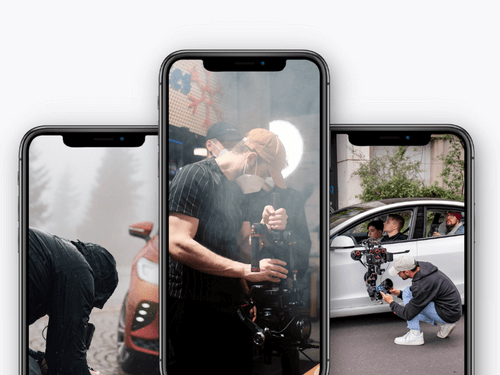
During filming, the team encounters a fast-paced environment with a tight schedule and constantly changing lighting and sound conditions. That’s exactly why a trade show video requires clear workflows, efficient communication, and a team that can quickly identify which scenes best showcase the presentation. The camera doesn’t just capture the booth; it also captures conversations, product details, visitor reactions, presentations, brand areas, and the atmosphere of the trade show.
The cost depends largely on the scope of the project for a given trade show day. A short video highlighting the event requires less effort than a trade show video featuring interviews, product shots, multiple booth areas, and additional content for social media.
The cost often depends on the following factors:
- How many hours or days of filming will take place at the trade show
- How large is the on-site team?
- What equipment is needed for camera, lighting, and sound
- How many products, people, and booths will be included
- Whether interviews, statements, or presentations are planned
- Whether additional short clips should be created for the website, sales, or social media
Post-production: Editing, Visual Style, and Sound
After the trade show, you’ll have plenty of raw footage. On average, this is edited into a cohesive film that doesn’t feel like a random collection of trade show scenes, but rather presents your presentation in a clear and professional manner.
Post-production weaves together interviews, product shots, static shots, and footage of the trade show atmosphere into a cohesive narrative. What matters isn’t just what’s shown, but also how quickly the film gets to the point.
Many trade show videos require more than one version. In addition to the main video, short clips are often produced for LinkedIn, the website, sales, or internal communications.
Typical services provided during this phase include:
- Reviewing and selecting the best trade show materials
- Rough cut and fine cut of the main film
- Audio editing for interviews and trade show audio
- Music, narration, or on-screen text
- Captions for social media and the website
- Export in multiple formats for different channels
Overview of trade show video production costs based on actual expenses
Note: As mentioned in the first chapter, the costs of a trade show video are always specific to each project. Therefore, use the following overview only as a rough guide for your project, as the trade show, objectives, shooting time, team, equipment, and scope of editing will directly affect the price.
To get a general idea, it helps to break things down into budget, standard, and premium packages. This will help you better assess which budget fits your trade show booth and what services are typically included.
Production type | Typical framework | What the budget is usually used for |
Budget- Production | approx. €3,000 to €7,000 | 1 day of filming, 1 videographer, minimal preparation, brief impressions of the trade show, simple product shots, tight editing, music, logo, and a short main clip |
Standard- Production | approx. €10,000 to €20,000 | 1 to 2 days of filming, planning and preparation, multiple videographers, a camera with audio and lighting as needed, interviews, product shots, static shots, subtitles, color correction, and 2 to 4 additional short clips |
Premium- Production | from approx. €20,000 to €35,000+ | 2 or more days of filming, a larger crew, more equipment, a feature film, multiple short versions, animations, motion design, subtitles, language versions, and formats tailored for different channels |
What factors drive the cost of video production?
The budget for a trade show video rarely depends solely on the length of the video. Much more significant factors include the number of shooting days, the size of the team, the equipment required, the amount of editing work, the location of the trade show, and how many final versions you’ll need in the end. Additional services, such as trade show photography, can also affect the overall cost.
A short trade show video can often be shot with minimal effort. A trade show film featuring interviews, product demonstrations, multiple booth areas, and additional clips for LinkedIn, the website, or sales requires significantly more planning and time.
These factors have a significant impact on the budget:
- Shooting days: Half a day at a trade show is often enough for quick snapshots, simple product shots, and a short video clip. As soon as you plan to include interviews, multiple program items, or a variety of shots, the effort required increases.
- Exhibition location and travel expenses: If the trade show is not held at the production team’s location, travel expenses, lodging, and additional travel time must be factored in. This can have a significant impact on the budget, especially for trade shows lasting several days or international events.
- Team size: A single videographer is ideal for short trade show clips. For larger productions, the team expands to include additional videographers, a producer, a sound engineer, or a live editor on site. This results in more angles, more usable footage, and a smoother workflow during the trade show.
- Equipment: A camera with a gimbal, compatible lenses, and a portable audio setup are sufficient for many trade show formats. For high-quality product shots, smooth camera movements, crisp interview footage, or impactful booth shots, the team will need more equipment and more time.
- Post-production: After filming, the raw footage is edited into a polished film. Editing, music, sound editing, sound design, color grading, text overlays, and subtitles add to the workload but ensure the trade show presentation is crisp and to the point.
- Animations: Animations are ideal when you want to clearly illustrate technical processes, product features, or statistics. They increase the budget because they require additional planning, design, and integration into the edit.
- Multiple formats: A main video for a website is different from a package that includes a trade show video, short clips, social media versions, and subtitles. Each additional version requires editing time and must be tailored to the specific channel. If photos are also to be produced, the workload increases accordingly.
Then there’s the approach itself. A provider focused solely on speed approaches budgeting differently than a partner who prioritizes impact and works closely with you. Company 11 takes a different approach in this very area. You’re not just booking camera and editing services—you’re hiring a team that thinks visually, guides you clearly through the process, and makes a high-quality trade show presence possible even on a smaller budget.
Trade Show Video vs. Promotional Video: The Difference
Many companies treat trade show videos and presentation videos as one and the same. While both are optional for filming at a trade show, they serve different purposes.
Trade Show Video | Promotional video | |
Fokus | Shows the trade show experience as a whole, including the booth, atmosphere, conversations, and highlights. | Provides a focused introduction to a product, service, or topic. |
Scope | Covers various aspects of the trade show, such as booth photos, visitors, interviews, and product highlights. | Keep it concise and focus on content that is explained or presented. |
Ziel | Extends the impact of the trade show beyond the event itself and provides material for marketing, sales, and communications. | Supports conversations at the booth, product demos, pitches, or internal presentations. |
Result | Usually a main video plus short clips for the website, LinkedIn, sales, or trade show follow-up. | Often a clearly structured film that explains an offer in an easy-to-understand way or showcases a product. |
How to Plan Your Video Production Budget Wisely
Before requesting a quote, you should determine what you want the trade show video to achieve and how much footage you’ll need in the end. The clearer your request is, the easier it will be to plan the scope of work.
These questions will be particularly helpful when planning your budget:
- What do you want the trade show video to achieve: more inquiries, better follow-up after the show, stronger sales materials, or greater visibility for your product?
- Where will you use the video after the trade show: on your website, LinkedIn, in sales, in newsletters, or for internal communications?
- Do you just need a main video, or do you also need short clips for social media and sales?
- What is the focus of the content: the booth, products, interviews, visitors, the stage program, or product demonstrations?
- Who will be appearing on camera, and when will they be available at the booth?
- Do you need animations, text overlays, subtitles, or multiple language versions?
- What are your preferences in terms of visuals and impact: a more minimalist style or a more elaborate production?
- What’s essential, and what would just be nice to have?
This classification helps with prioritization:
Priority | It’s often part of it |
Must go in | clear objective, strong main video, clean audio, good editing |
Can come in | additional summaries, subtitles, photo selection |
Only if the budget allows | several videographers to capture more angles, perspectives, and usable footage |
It’s also important for your team to decide early on who will provide feedback and who will give final approval. Otherwise, revisions will drag on unnecessarily, and the budget will be wasted on areas that don’t add any real value.
Conclusion: Accurately assess trade show video costs and plan effectively
The cost of a trade show video isn’t just due to having a camera crew on site. The budget is determined by preparation, shooting time, team size, equipment, and editing. The more precisely you know your goals, locations, and required formats, the easier it is to plan the budget.
A short LinkedIn video requires less preparation than a full-length video for a website, sales, or trade show follow-up. So don’t just compare prices—compare the scope of services as well. Check what preparation is included, who will be present during filming, what equipment will be used, and what versions you’ll receive.
Company 11 guides you through the entire process, from the initial briefing to the finished film. You won’t just get a camera crew—you’ll get a production team that understands your trade show presence, plans impactful visuals, and maximizes the amount of usable footage within a limited shooting schedule. The result is a trade show film that keeps your booth, your products, and your brand visible long after the event, for marketing, sales, and internal use.
Let’s get your project off the ground together. Send us your idea, and we’ll quickly provide you with a detailed estimate of the scope, budget, and implementation.
Are you looking for an agency to produce a trade show video?
Trade Show Video Costs – Frequently Asked Questions
How much will a trade show video cost for businesses in 2026?
In 2026, a trade show video typically costs between €3,000 and €30,000. A short trade show clip produced by a small team often starts at €3,000 to €7,000, while a feature-length video with interviews, product shots, subtitles, and highlights tends to cost between €10,000 and €20,000.
How long does it take to produce a trade show video?
A short trade show video typically takes 1 day of filming and 5 to 10 business days to edit. Short clips for LinkedIn, websites, or sales can often be delivered sooner, such as 10- to 30-second clips. For larger projects involving interviews, subtitles, animations, or multiple versions, you should expect 2 days of filming and 10 to 20 business days for the main video.
How much does a corporate video cost compared to a recruitment video?
A recruitment video typically costs between 4,000 and 10,000 euros, as it often features interviews, authentic insights, and a clear focus on job applicants. An image film typically costs between 5,000 and 15,000 euros or more, as it is intended to present the company in a broader context and have a stronger visual impact. This often increases the effort required for the concept, visual style, and production.
What additional costs are often overlooked in film projects?
Rights of use, music licenses, travel expenses, voice-over artists, subtitles, and additional edited versions for different channels are often overlooked. Additional rounds of revisions or special formats for social media sometimes don’t show up in the estimate until later. That’s precisely why it’s worth carefully reviewing quotes to see exactly what’s included.
Can AI significantly reduce the cost of film production?
AI can speed up certain steps, such as transcriptions, subtitles, or initial drafts. What it cannot replace are the concept, direction, cinematography, lighting, sound, and fine editing—precisely the elements that make a film great. That’s why AI reduces costs in some areas, but it doesn’t suddenly make professional production cheap.