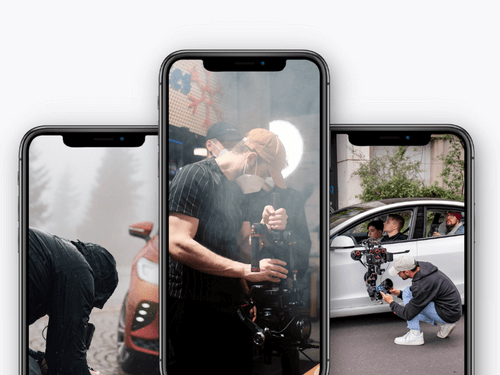

Product Video: The basics
- Product videos highlight features, applications, and benefits. In this way, they support prospective customers during the awareness, consideration, and decision-making phases.
- A sleek studio video highlights the design and craftsmanship. How-to videos demonstrate the product’s functionality, while emotional product videos connect the product to a relevant lifestyle.
- A compelling product video concept defines the target action, selling point, target audience, strongest use case, and required video versions before production begins.
- Company 11 develops and produces product videos in Berlin, from the initial concept to the final versions for websites, social media, ads, trade shows, and sales.
What role does a product video play in the buying journey?
A product video translates features and benefits into visual evidence. This means that prospective customers don’t have to rely solely on a description to imagine a feature, material quality, or application. They can see right away how the product is used and what a difference it makes.
This format is particularly relevant for B2B products that require explanation. According to a B2B Buyer Journey Study, 70 percent of the B2B decision-makers surveyed from medium-sized companies watch product videos on mobile devices when researching new software solutions. In the 2025 B2B Content Marketing Study, 58 percent of the B2B marketers surveyed rated videos as the content format that delivers the best results.
Throughout the buying journey, a product video can serve several purposes:
- Awareness: The video quickly conveys what problem the product solves and who its target audience is.
- Consideration: Application images, details, and animations demonstrate features, quality, and differences from other solutions.
- Decision: Specific product information helps decision-makers evaluate the offer and share it internally.
Which product video style best suits your goal?
The right style stems from the product benefit you want to highlight or bring to life. A high-quality material calls for a different presentation than a specific application. The target audience, brand impact, and distribution channel also influence the decision.
When a Clean Studio Video Is Appropriate
A clean studio video puts the product front and center without any distracting surroundings. It’s particularly well-suited for products where the design, materials, or craftsmanship are the key selling points. A controlled setup allows for precise lighting, neutral backgrounds, and repeatable camera movements. Macro shots draw the viewer’s attention to textures, connections, and small details.
Glossy, transparent, or dark surfaces require special attention. Reflections, fingerprints, and dust are immediately noticeable in close-ups. Product preparation, lighting, and set construction therefore account for a large portion of the shooting time. The result looks high-quality, minimalist, and consistently focused on the product.
A polished studio video aligns with my goal if …
“I want to showcase the form, material, and craftsmanship of my product in a way that highlights its high quality. The quality should be evident through the lighting, camera work, and close-ups.”
When an application video better showcases a product’s benefits
A demonstration video shows the product in a realistic usage scenario. It’s ideal when the key benefit only becomes apparent through a specific action, movement, or workflow. This helps the target audience understand more quickly how the product works and what benefits it offers in everyday life.
The filming location depends on the product. Movable items can be filmed in a studio or at a selected location. Machinery, equipment, and permanently installed systems require filming at the company’s site. A shot list specifies which wide shots convey the context and which close-ups document the key steps in the process.
An application video aligns with my goal if …
“I want to show how my product solves a specific problem. The target audience should be able to understand how it works and grasp its benefits through a realistic use case.”
When an Emotional Product Video Featuring Actors Is Appropriate
An emotional product video links the product to a specific lifestyle, user experience, or brand image. Actors demonstrate the product in a believable setting. The location, set design, costumes, music, and editing create a visual world in which the target audience can see themselves reflected.
The film doesn’t need a complex plot to achieve this. A carefully selected scene is enough, as long as it brings the key product benefit to life. Actors, additional locations, and set modifications increase the planning effort. At the same time, this creates content that can be effectively used for campaigns, social media, and paid ads.
An emotional product video aligns with my goal if …
“I want to associate my product with a specific mood or lifestyle. The target audience should be able to relate to the situation depicted and experience the product’s benefits on an emotional level.”
What are the five questions that lead to a compelling product video concept?
A compelling product video concept answers five questions regarding the storyline, selling point, target audience, application, and presentation. The answers distill a long list of features down to a clear core message and translate that message into scenes that truly showcase the product’s benefits.
- What action should the product video prompt? Define the desired action. The viewer understands the product, selects it in the store, submits an inquiry, or takes the next step in a sales conversation. This goal helps refine the narrative structure and the call to action.
- Which product benefit should be visible in the image? Choose a key selling point. Quality comes across as credible when a close-up shot highlights the material and craftsmanship. Speed requires a clear demonstration or comparison.
- What questions does the target audience have before making a purchase? A B2B buyer looks for different information than an end customer. Typical questions relate to operation, integration, durability, security, or specific applications.
- Which use case best demonstrates the product’s benefits? Find the scenario in which the product proves its value. A single action, a production step, or an interaction within a software application is ideal for this.
- On which channels and in which versions will the film be released? Websites, social media, ads, trade shows, and distribution each have their own requirements regarding opening sequences, length, aspect ratio, and audio. The required versions must be included in the planning before filming begins.
Based on these responses, the production team develops a rough concept, a treatment, and a shot list as needed. This ensures that the focus on set remains clear. At the same time, it generates enough footage for the main film and the planned short versions.
What’s the process for having a product video created?
If you’d like to have a product video created, the process consists of five steps, from the initial briefing to the final delivery. A clear approval process ensures that the message, deadline, and scope remain aligned throughout the entire production process.
- Briefing: The target audience, core message, distribution channels, timeline, and budget are defined. This is supplemented by details on dimensions, materials, product samples, CAD data, and presentation guidelines.
- Concept: The briefing gives rise to a visual concept, treatment, script, storyboard, or shot list. The level of detail required depends on the chosen production style.
- Production Planning: The production team coordinates product samples, the studio or location, cast, props, crew, logistics, and shooting schedule.
- Production: The planned shots and close-ups are filmed during production. For animated elements, the process involves modeling, texturing, animation, and rendering.
- Post-production: Editing, color grading, sound design, music, motion graphics, and voice recordings are used to turn the raw footage into the finished product video. This is followed by feedback sessions and the creation of the agreed-upon master copies.
Berlin offers a variety of production options for this. Products that can be transported can be filmed under controlled conditions in a Berlin studio. The team films machinery and permanently installed systems directly at the company’s location. For emotional scenes, suitable locations and actors can be arranged.
Conclusion: Create a product video and highlight the product’s benefits
Product videos are more than just high-quality footage and clean editing. The goal, target audience, core message, style, and distribution channels determine whether your video presents the product clearly and helps drive the purchase decision.
That’s why it’s worth taking a close look at the product and its key benefits before production begins. A studio video highlights the design and craftsmanship. A how-to video demonstrates how it works, while animations make invisible technical processes easy to understand.
Company 11 guides you from the initial briefing all the way to the finished product video. You won’t just get a camera crew—you’ll get a video production team that understands your product, develops a suitable visual concept, and tailors all versions to your planned channels.
Let’s work together to flesh out your project. Send us details about your product and your goals, and we’ll quickly provide you with a detailed assessment of the design, effort required, and implementation.
Are you looking for a production team to create product videos?
Berlin Product Video – Frequently Asked Questions and Answers
How long should a professional product video be?
The appropriate length depends on the task and the channel. For paid ads, a few seconds per message are often sufficient. A product demo on the website or during a sales pitch can demonstrate a feature in greater detail. Every version needs a clear core message.
Can software and digital services be presented in a product video?
Software can be demonstrated using screencasts, interface animations, and real-world application scenarios. For digital services, the focus is typically on a specific workflow or use case. The video shows how users proceed and what specific benefits they gain.
How much does it cost to have a product video produced?
As a rough guide, a professional product video typically costs between 5,000 and 10,000 euros. The exact price depends, among other things, on the production style, shooting time, studio or location, actors, animations, and the number of versions required. The scope of production is a more meaningful factor in the calculation than the video’s length alone.
How can you tell if a product video agency in Berlin is the right fit?
A suitable product video agency will showcase comparable visual styles or production requirements in its portfolio and ask questions about the target audience, value proposition, and distribution channels. The proposal should clearly outline the concept, shooting schedule, team, post-production, usage rights, rounds of revisions, and delivery dates. Any services that are not included must also be clearly identified.
What services does Company 11 provide for a product video production?
Depending on the agreed-upon scope, Company 11 will handle the concept development, filming, and editing. The quote includes the specific services, feedback sessions, and deliverables for your project.